Cart
0
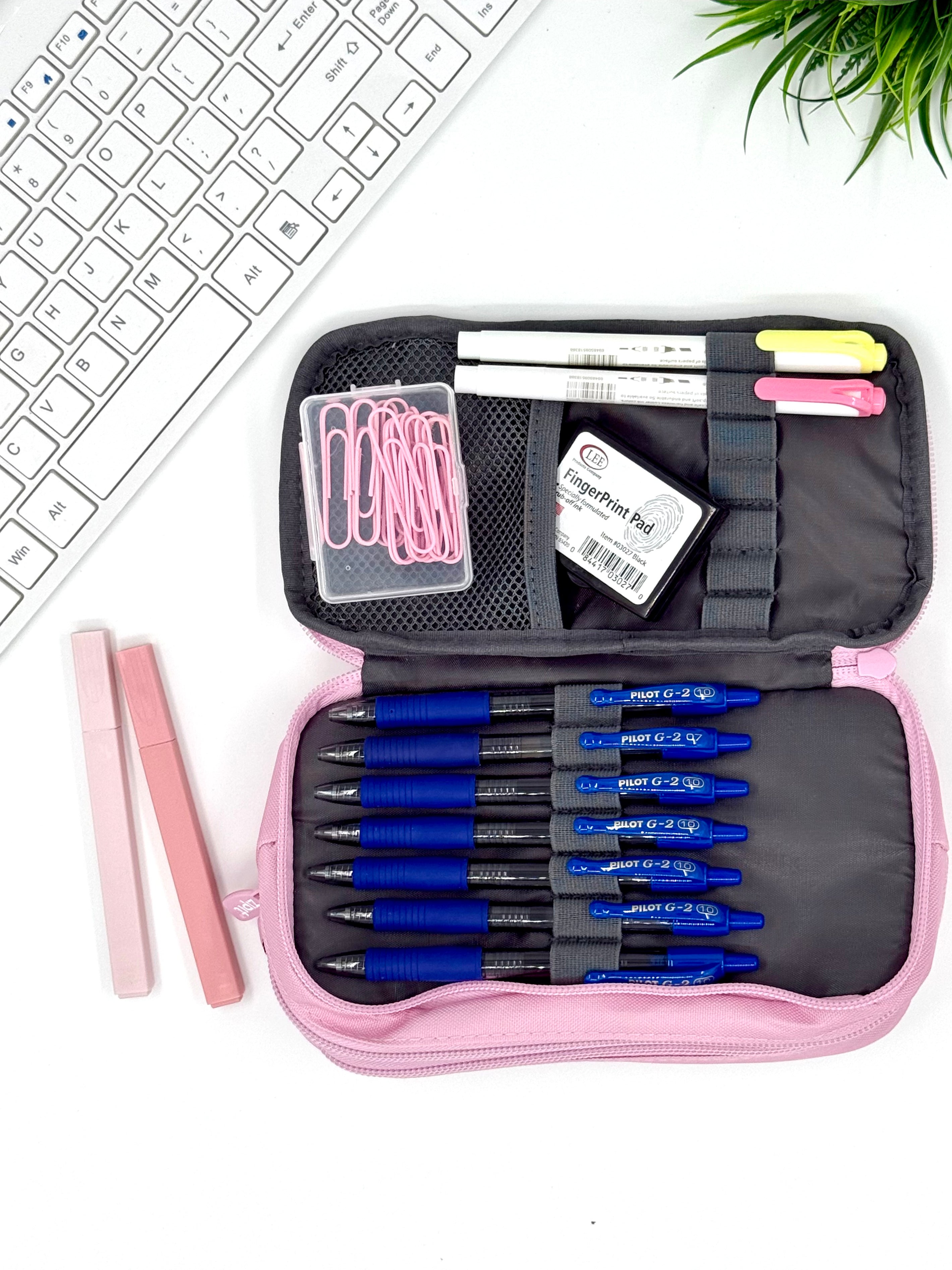
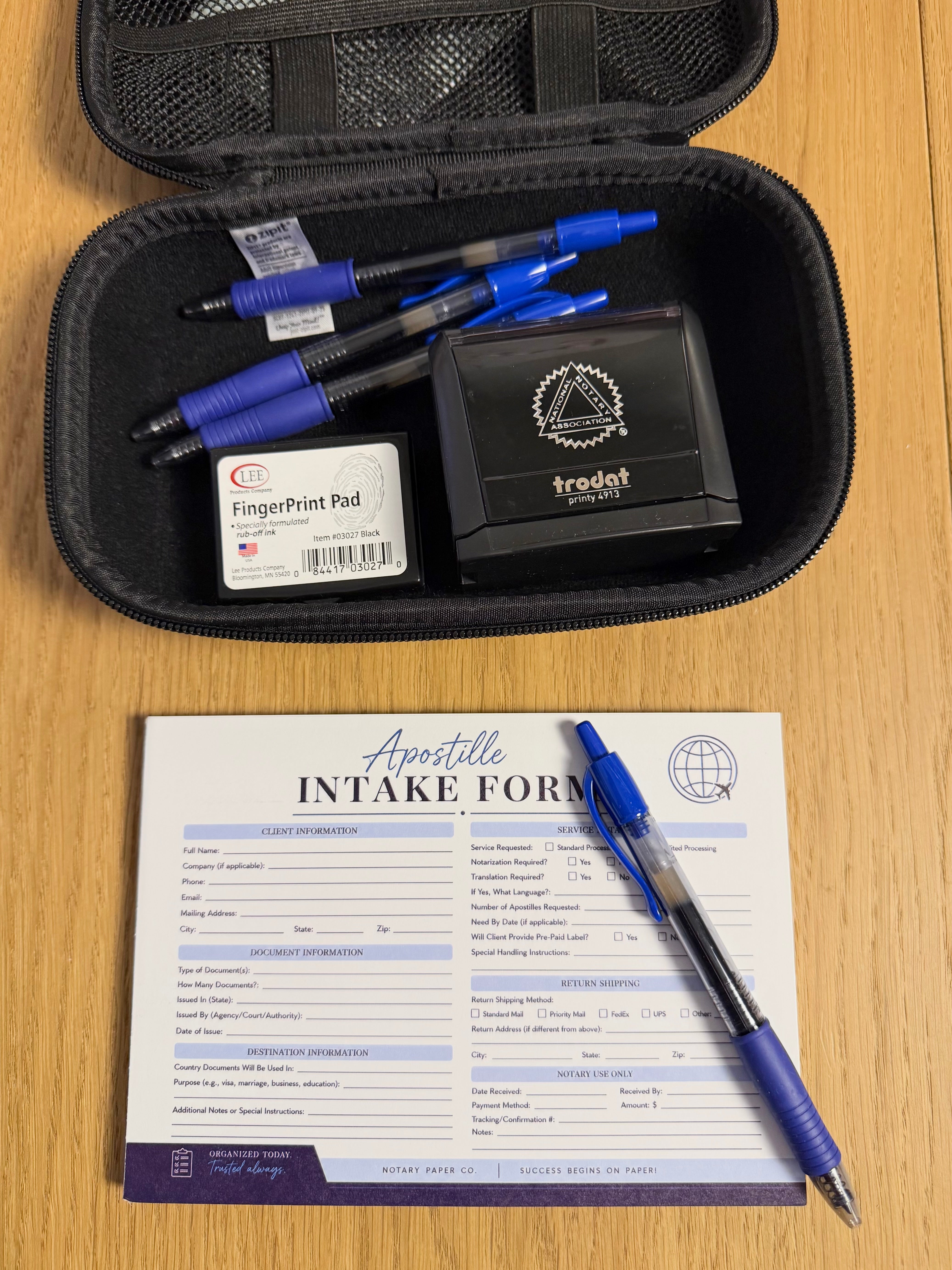
A new mobile notary’s supply kit includes a stamp or seal that meets their state’s rules, a suitable notary journal, blue and black pens, a secure carrying bag, document folders, a clipboard, and a charged phone. Appointment forms, a planner, payment tools, and a charger help with the business side. Printing and scanning equipment can come later as your services require it.
Starting a mobile notary business comes with plenty of decisions. Your supply bag should make appointments easier, not become another project before you have even booked your first client. Start with the basics below and build a setup that works for the appointments you actually accept.
This checklist focuses on in-person mobile appointments. Confirm your commissioning authority’s current requirements before purchasing a seal or journal; supply requirements and recordkeeping rules vary by state.
1. A notary stamp or seal
Choose a stamp or seal that meets your state’s requirements and matches your commission information. Check the details carefully when it arrives, and test the impression on scrap paper before taking it to an appointment.
A protective pouch keeps ink away from the rest of your supplies. Store your seal securely and keep it under your control. A cute pouch earns its place in the bag, but it does not replace secure storage.
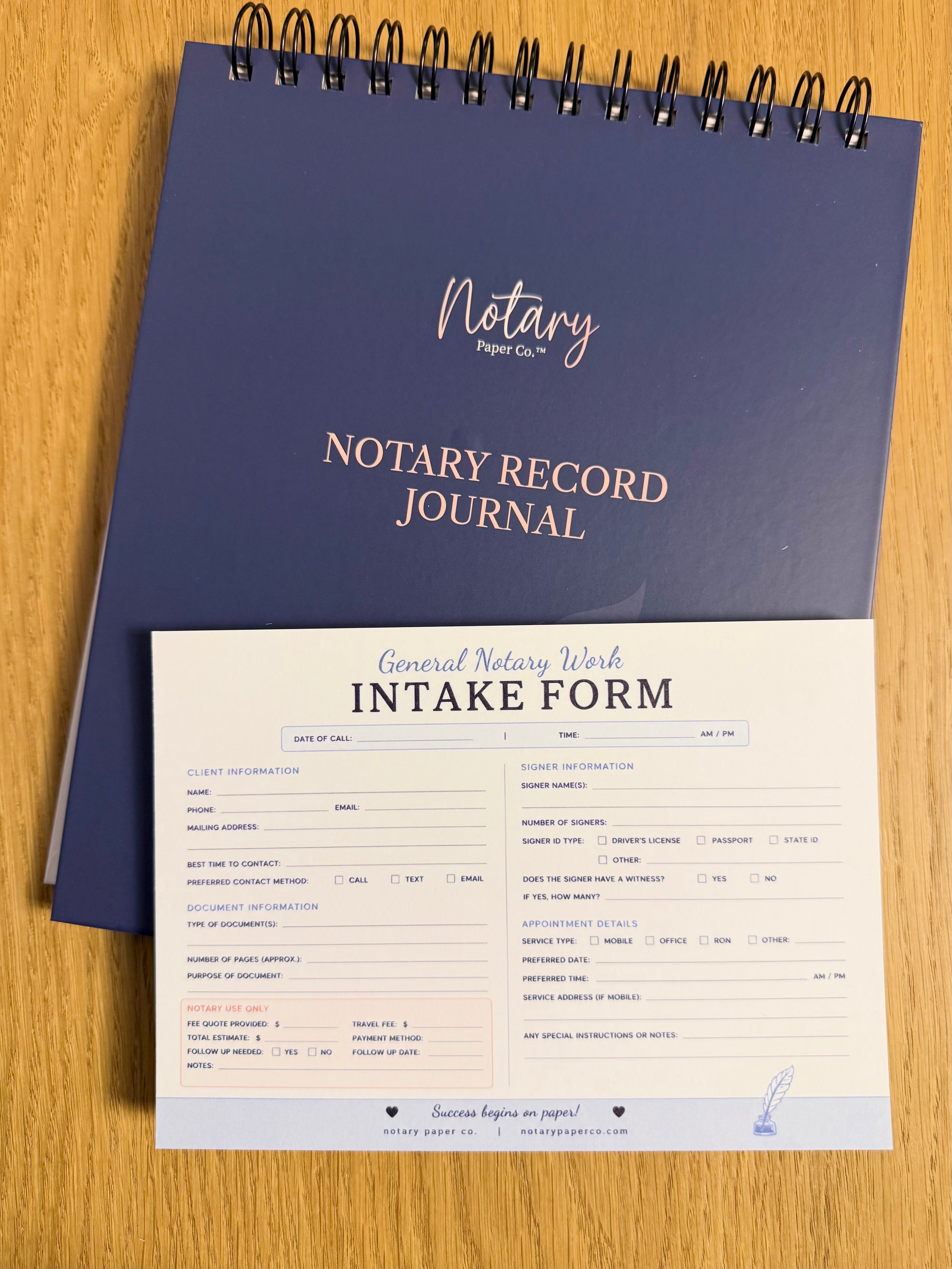
2. A notary journal
Choose a journal appropriate for your state’s recordkeeping rules, with a layout you can comfortably use at the table. Texas, for example, requires notaries to maintain a record book. Review your own state’s guidance on what to record, what not to record, and how to maintain the records.
Your appointment planner and your notary journal serve different purposes. One helps manage your schedule; the other documents your notarial work. An intake form is not a substitute for a required journal entry.
3. Blue and black pens
Pack several reliable pens in both blue and black ink. Follow the applicable document instructions and requirements for ink color. Keep an extra pen for yourself and a few available for signers.
Test them before you leave. The signing table is a very inconvenient place to discover that every pen in your bag has retired.
4. A secure bag and document folders
Look for a bag that closes securely, holds your journal, and has a consistent place for your stamp and pens. If you expect to handle legal-size documents, make sure your folders and bag can accommodate them without folding the pages.
Use separate folders for each appointment so documents do not get mixed together. Keep client paperwork out of view and use secure storage between appointments. A lockable compartment or case can be a useful addition.
5. A clipboard and small organization supplies
A clipboard or firm writing surface helps when the available table space is limited. Binder clips keep document sets together, while removable tabs and sticky notes can help you organize your own workflow.
Use these tools carefully around client documents. Keep notes and markers from covering text or signature areas, and remove temporary tabs when the receiving party’s instructions call for it.
6. Appointment forms and a planner
A simple intake form gives you one place to capture the appointment address, contact information, number of signers, timing, and agreed service details. Collect only information you need and protect any personal information you retain.
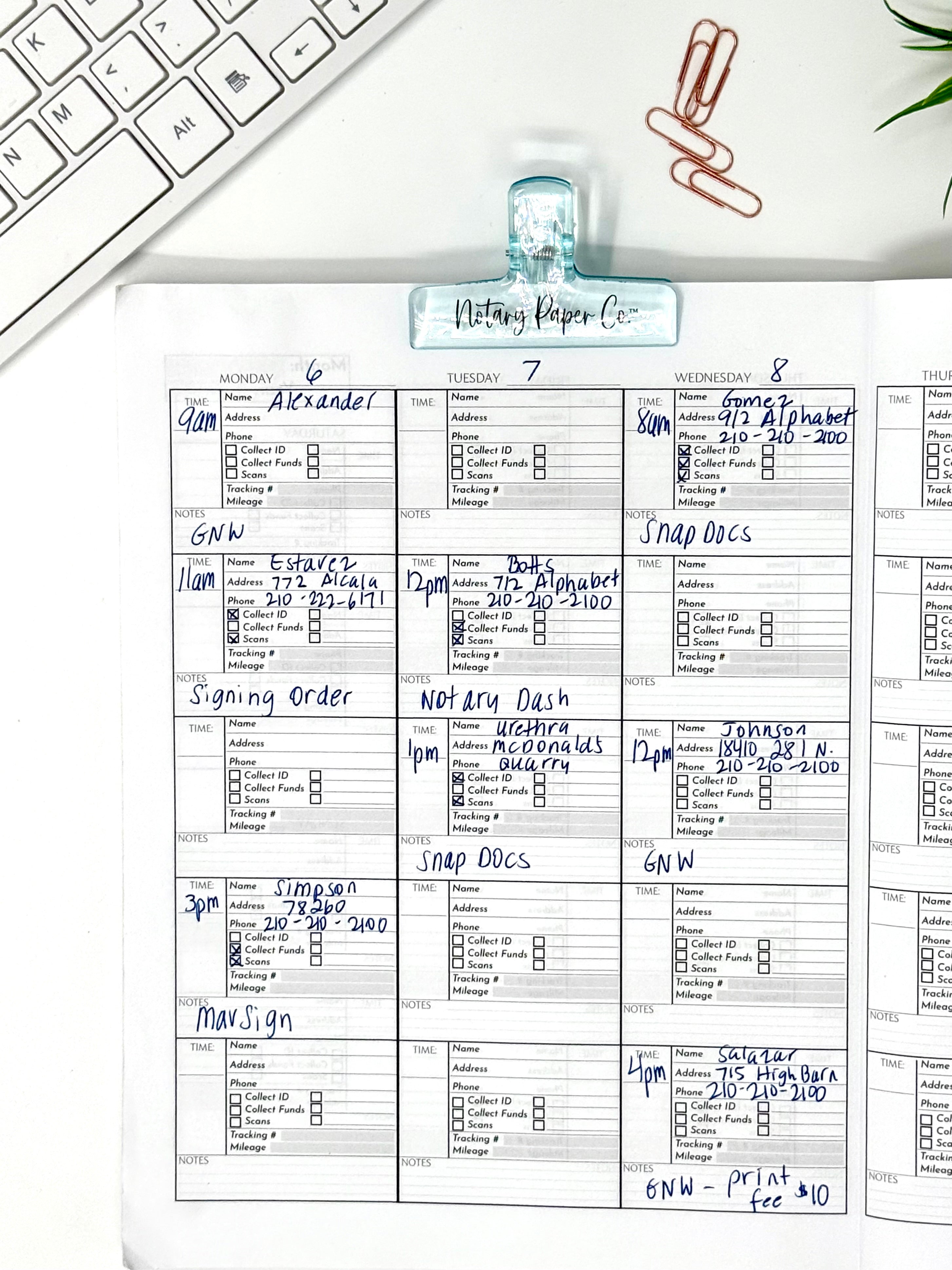
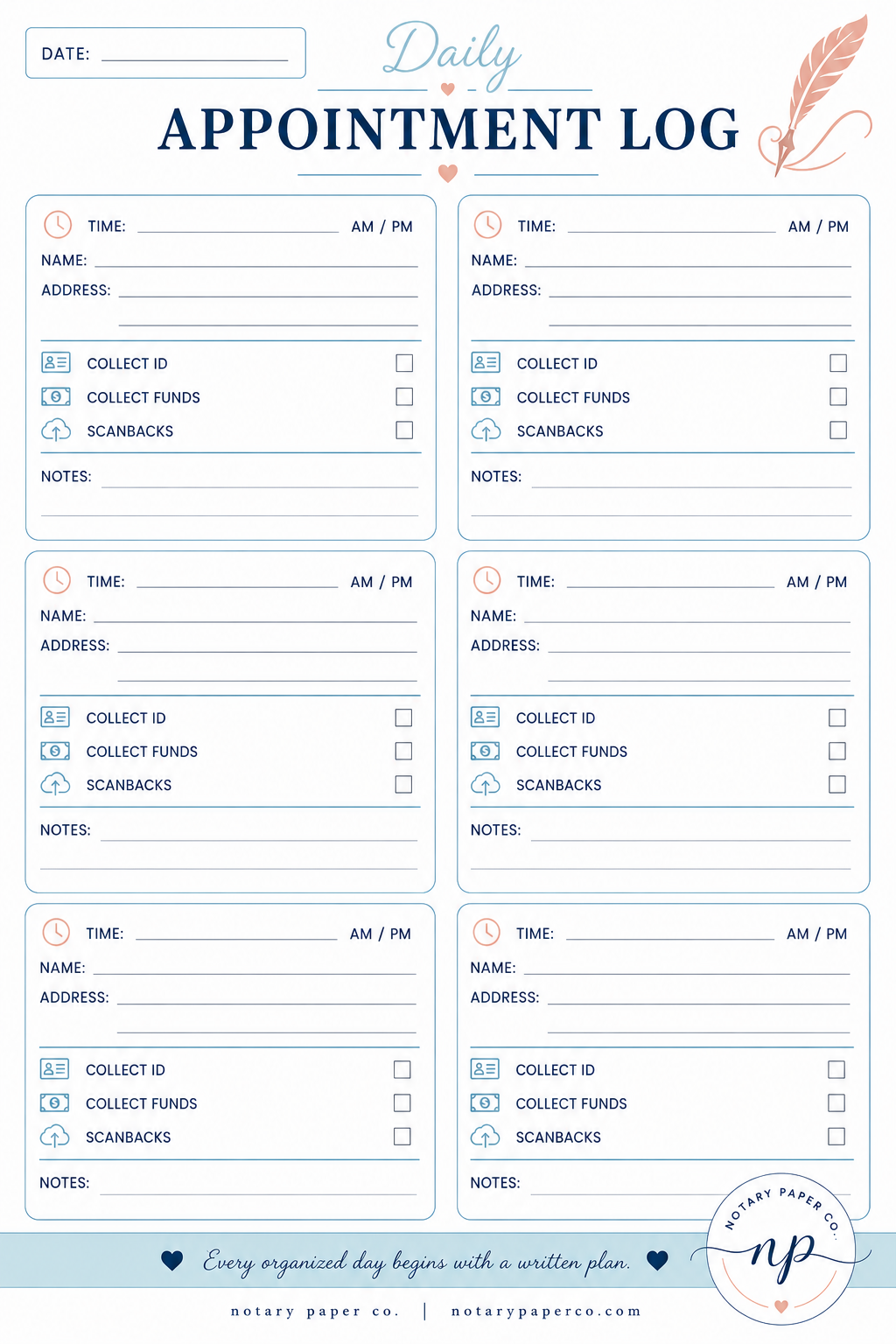
A paper planner, daily appointment log, or digital calendar can help you allow time for driving, parking, the appointment itself, and your next stop. Choose a system you will actually keep updated. A fully booked day gets complicated quickly when every appointment is scheduled as if traffic does not exist.
7. A phone and charging supplies
Your phone supports navigation, appointment confirmations, and client communication. Bring a charging cable and a car charger or portable power bank. Save the appointment address and contact information before heading out.
Protect your device with a passcode and use secure methods for handling client information. If a hiring company requires document uploads, follow its approved process.
8 .Payment and business tools
Have a clear way to send an invoice or receipt and collect payment for direct client appointments. Confirm the payment arrangement and applicable fees before the appointment. Business cards or a QR code linking to your website can also make it easier for clients to find you again.
Keep a simple system for tracking business expenses and mileage from the beginning. It is much easier to record a trip today than reconstruct a month of appointments later.
Equipment to add as your services grow.
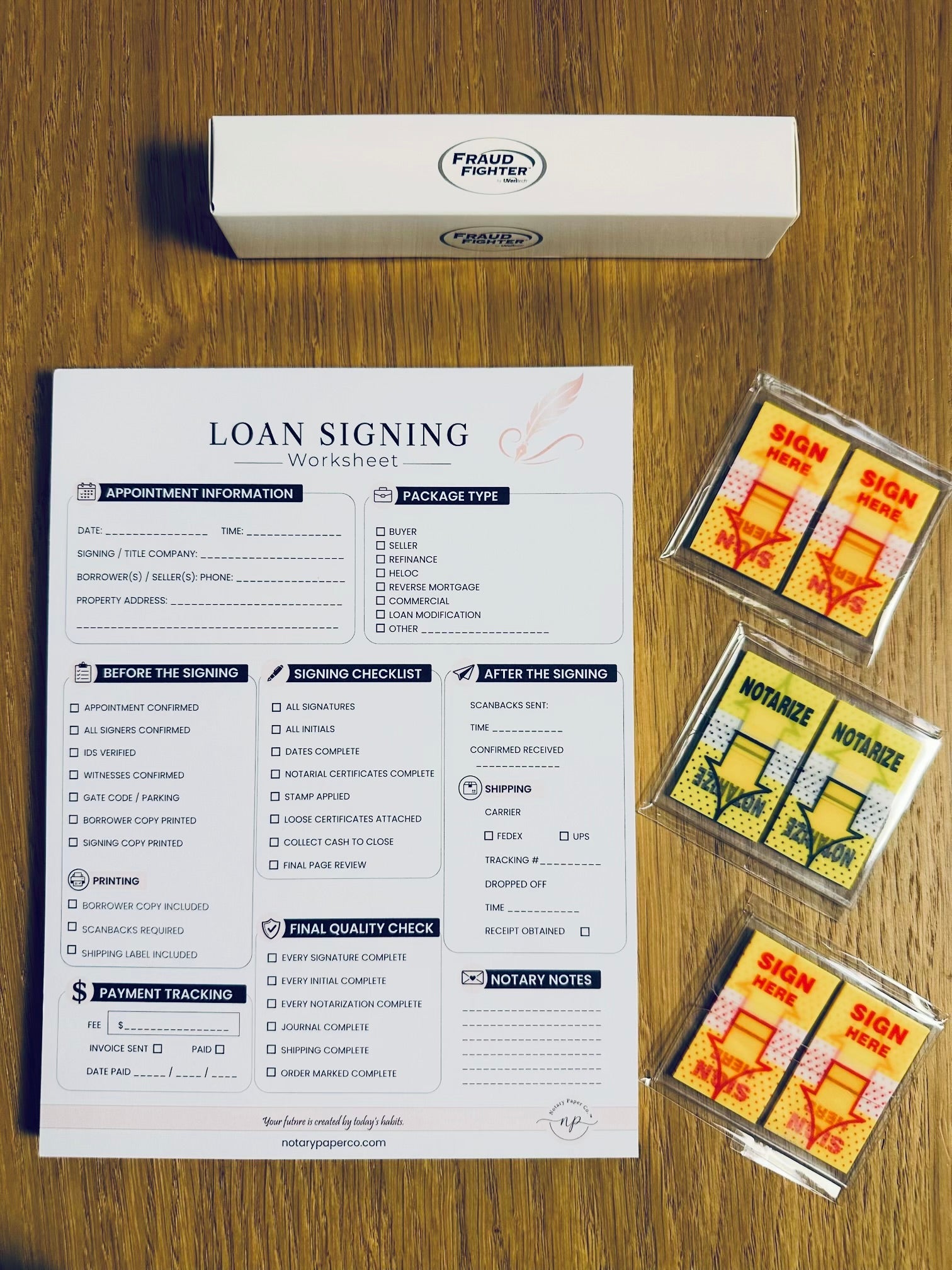
If you plan to accept loan signing assignments, review the hiring companies’ printing, paper-size, scanning, and delivery requirements before buying equipment. A laser printer that handles letter and legal paper, a dependable scanner, and extra paper and toner may become useful investments.
For general mobile notary appointments where clients provide their documents, that equipment may not be your first purchase. Buy around the services you plan to offer and the work you are prepared to accept.
A quick checklist before you leave:
- Stamp or seal and appropriate journal
- Working blue and black pens
- Appointment documents and separate folders
- Clipboard, binder clips, and removable tabs
- Confirmed address, contact details, and appointment instructions
- Charged phone and charging cable
- Payment or invoicing method, when needed
Frequently asked questions:
Do I need a printer to start as a mobile notary?
Not for every type of appointment. If clients supply their documents, you may be able to begin without one. If you accept assignments that require you to print documents, you need access to equipment that meets those instructions.
Can I use a regular notebook as my notary journal?
Do not assume any notebook will meet your state’s requirements. Check the required format and recordkeeping rules before choosing. A purpose-designed journal can make entries easier to organize, but you still need to verify that it fits your state’s rules.
Should I buy a notary starter kit?
A starter kit can simplify shopping when its contents match what you need. Compare the current item list with this checklist and the supplies you already own. Confirm whether you need to purchase a personalized stamp, a suitable journal, or other items separately.
Build a bag that works for you.
Being prepared means knowing where your supplies are and having what you need when you arrive. Start with a dependable setup, restock it regularly, and add tools as you learn what makes your workday easier.
Ready to put your supplies together? Explore the Notary Starter Kit collection at Notary Paper Co. and compare the current options with your checklist. We are here to help you bring a little more organization—and personality—to your notary day.