Cart
0
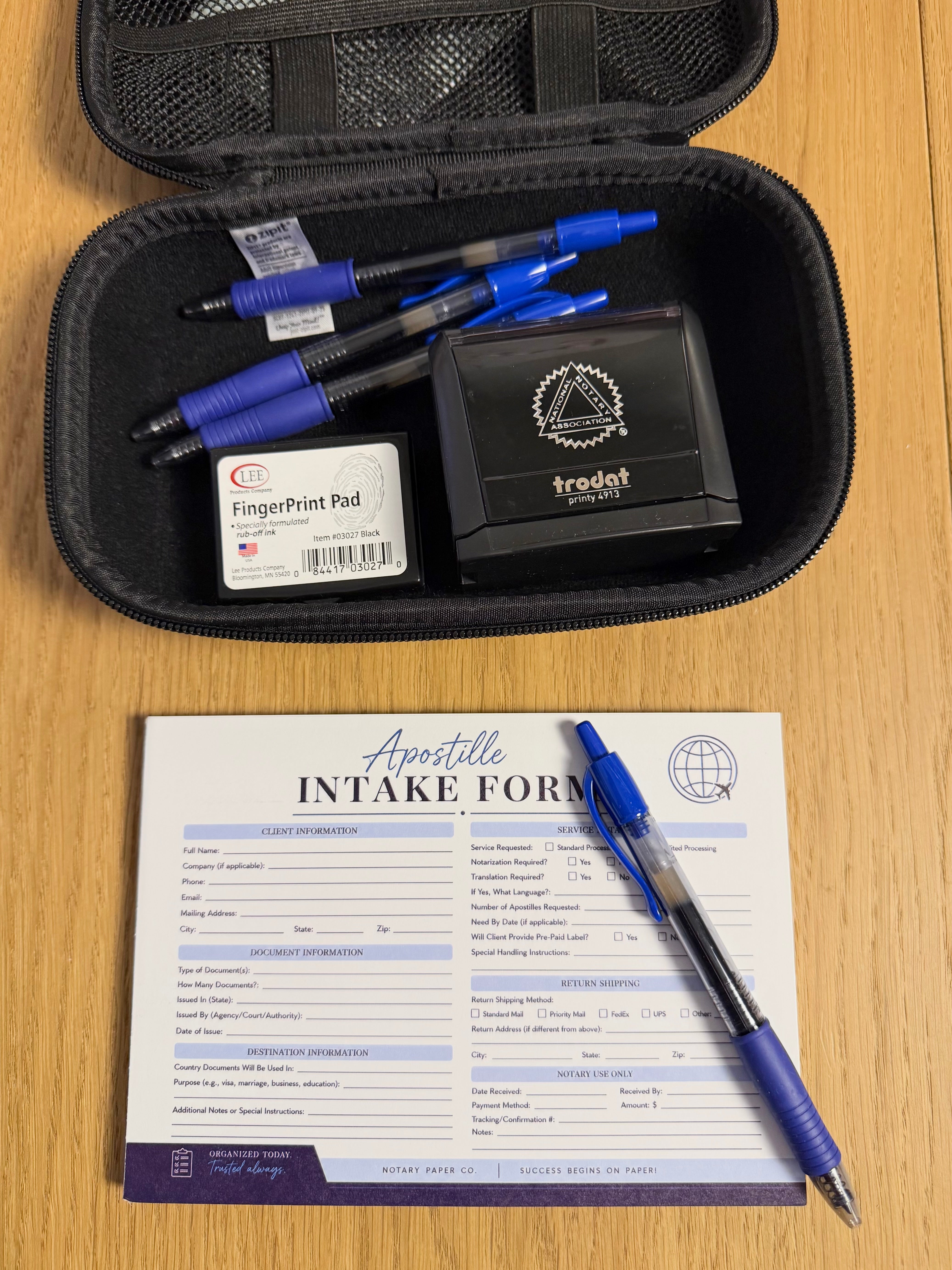
Apostille intake: the information to collect before you touch a document
An apostille request lives or dies on the intake call. Unlike a standard notarization — where the work happens at your table — an apostille runs through the Secretary of State's office, and the intake decides whether the request gets accepted on the first pass or bounces back for corrections. Collect five things up front: the client, the document, its notarization status, the destination country, and the timeline. Miss one, and you're the one making the second trip.
Everything below is workflow advice. Apostille rules, fees, and processing times are set by your state's Secretary of State (the U.S. Department of State maintains authentication guidance as a starting point); your state's rules always win.
Client and contact basics
Start with the same foundation as any intake:
• Full name, phone, and email. Confirm the name as it appears on their ID and on the document — a mismatch here is one of the most common reasons a request stalls.
• What the document is for. A birth certificate for a foreign marriage, corporate papers for an overseas office — the purpose tells you which authentication track you're on.
• How they found you. Apostille clients are often first-time notary clients; one line here doubles as your marketing log.
Document details and notarization status
This is where apostille intake differs from everything else you do:
• Document type and page count. Some documents (vital records, court documents) may need certified copies rather than the original — capture the type so you can flag problems before the state does.
• Has it been notarized? Many documents must be notarized before they can be apostilled. If it hasn't been, note it — that notarization is a separate appointment on your calendar.
• Originating state. Apostilles are issued by the Secretary of State of the state where the document originates or was notarized. A Texas notary can't walk a Louisiana document through Austin.
• Who handles the submission — you or the client? Some clients just want the paperwork organized; others want you to hand-carry or mail it. Capture the answer on the first call, not in a text thread later.
The destination country — the field that changes everything
The single most important field on an apostille intake: where the document is going.
• Hague vs. non-Hague. A document headed to a Hague Convention country gets an apostille; one headed to a non-Hague country goes through a different chain (often embassy legalization). Different process, different forms, different fees, different timelines — knowing the country on the first call is the difference between quoting correctly and re-quoting later.
• Spell the country. "Democratic Republic of the Congo" and "Republic of the Congo" are different countries with different rules. Ask the client to spell the destination.
• Ask what was actually requested. "Apostille," "authentication," and "certified copy" are three different things, and clients mix them up. Ask what the receiving organization asked for — in their words.
Timeline and shipping logistics
Apostille work moves at the speed of a government office, so set expectations on the first call:
• The client's deadline. Back-calculate from their deadline, not forward from today — state processing times vary, and expedited options aren't always available.
• How the document comes back. Will the client pick it up from you, or does it ship straight to the destination? Capture the return address on the intake.
• Fees and payment. The state apostille fee, your service fee, and return shipping are three separate line items. Note what's been paid and what hasn't.
Turn every request into a paper trail
Apostille requests take longer and involve more hands than a standard notarization — which is exactly why the paperwork matters more:
• Fill the intake on the first call, not from memory afterward.
• Log the underlying notarization in your Notary Public Logbook at the time you notarize — the apostille request starts from that entry.
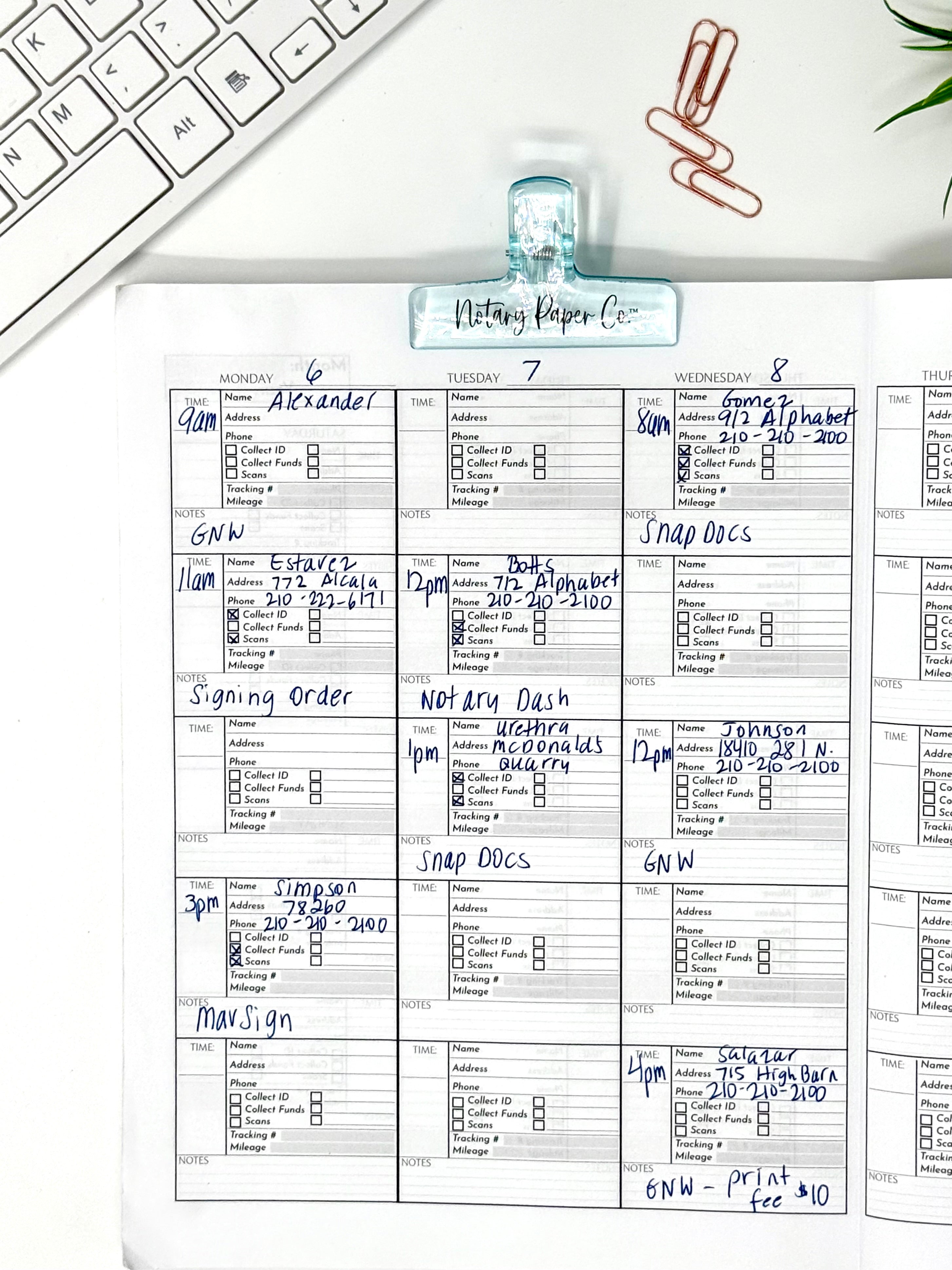
• Copy the deadline into your Undated Appointment Book the same day. A deadline that only lives in your head will find the one week you forget.
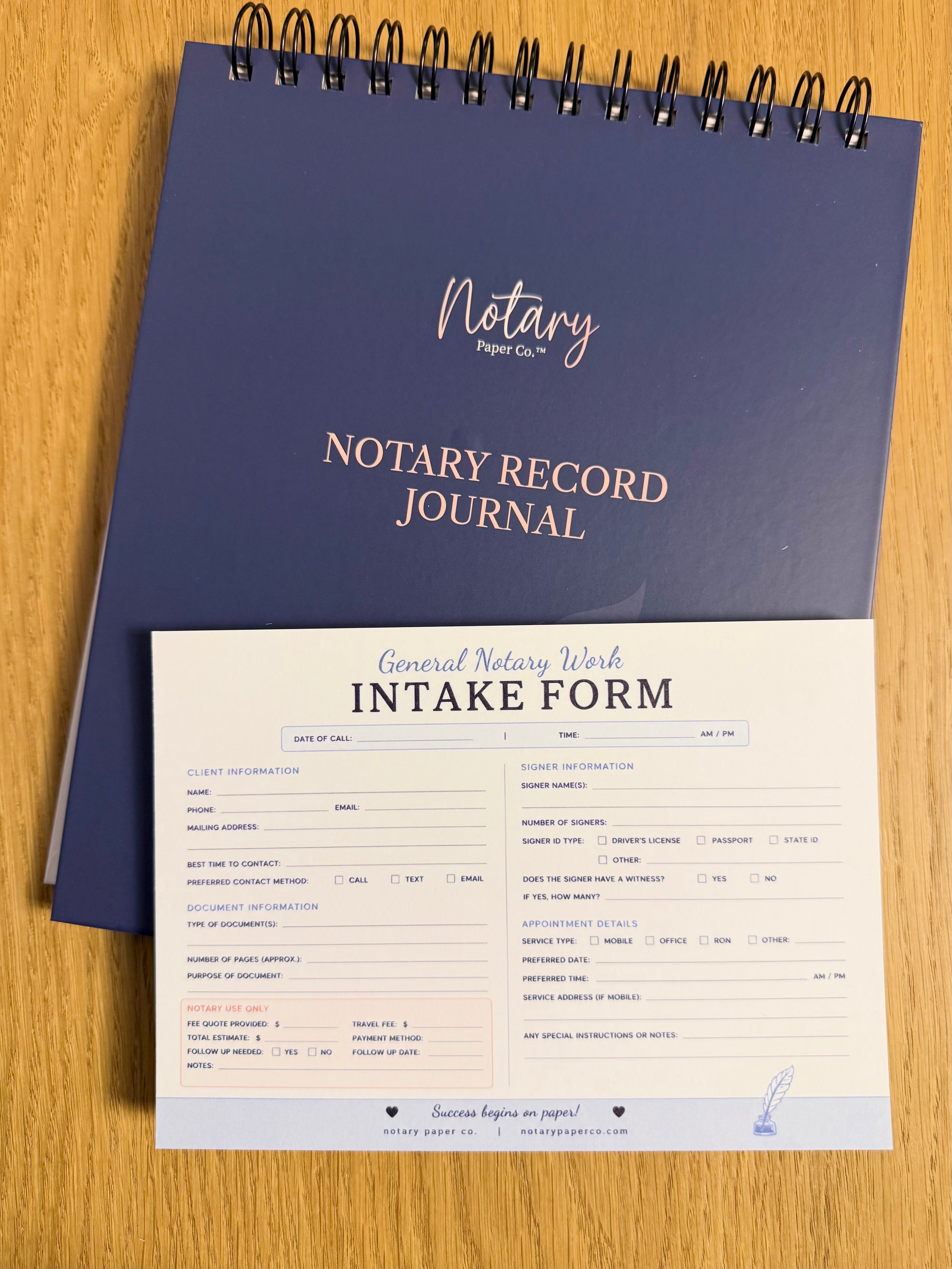
The Apostille Intake Form was built for this whole flow — client information, document details, destination fields, notarization status, pickup and drop-off confirmations, and a service summary with shipping and tracking — so the request is client-ready when you walk it through.
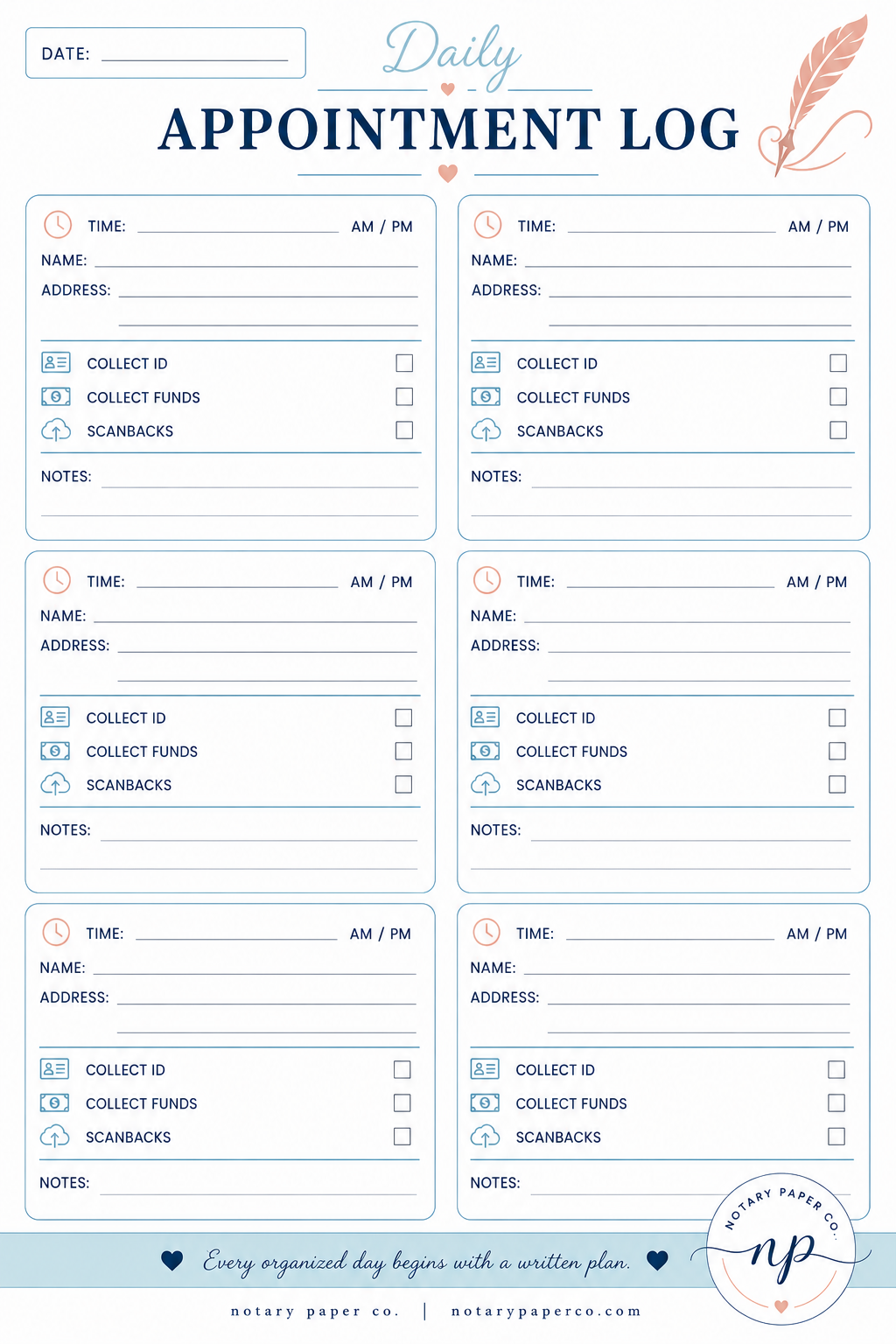
Browse the full Notepads collection to see every intake and appointment form in one place.