Cart
0
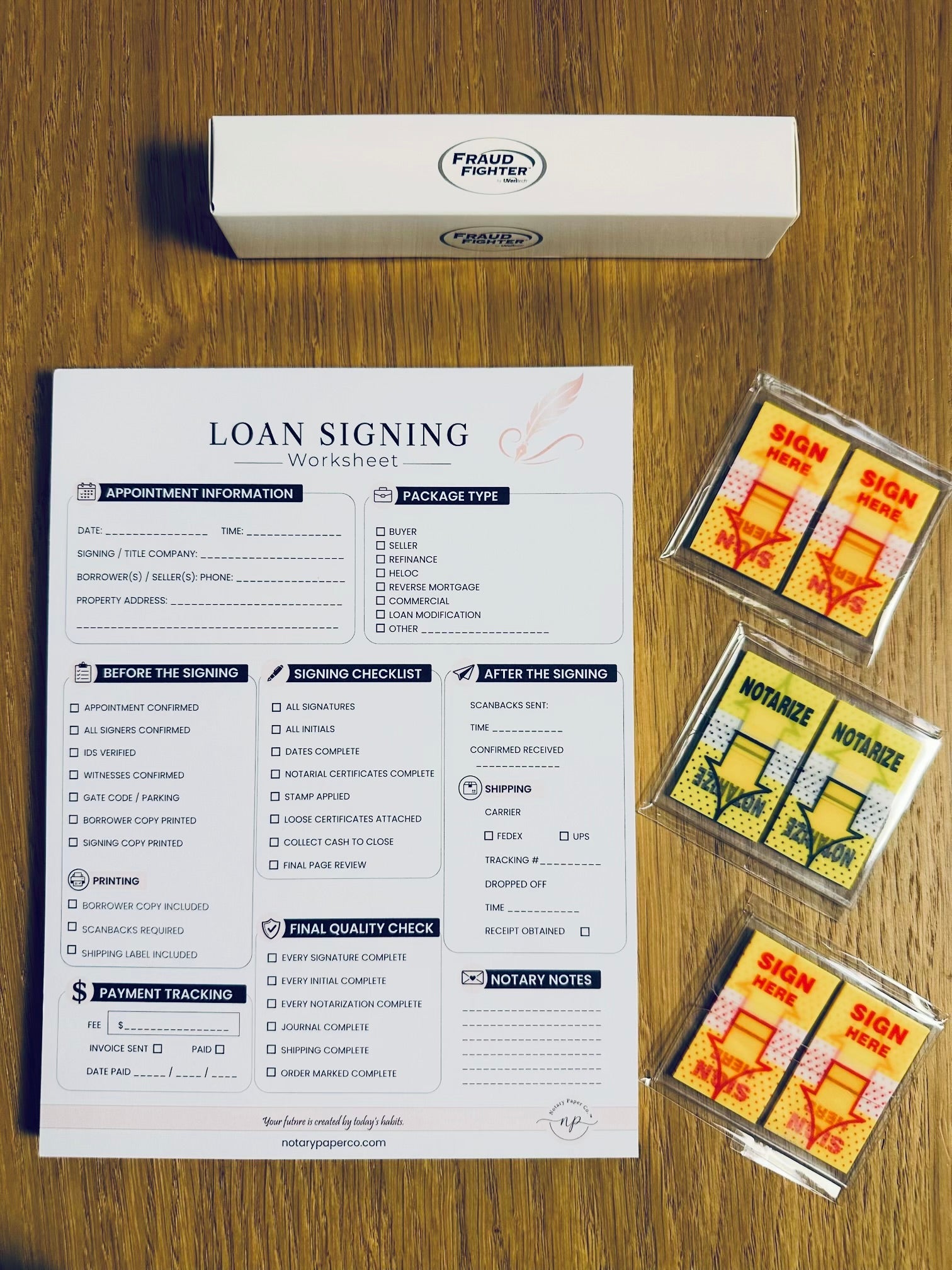
The best system for organizing a loan signing package is simple: review the package in the order you received it, tab every signature and initial so nobody hunts for a field, run ID checks smoothly at the start, and finish with a post-signing routine: scan-backs, the drop, and your journal entries. A 120-page package handled this way takes the same mental effort as a five-page one. Here's how to set it up.
One hard rule first: do not reorganize loan documents. Title companies frown on reordering a loan package, and as notaries we must sign and return it in the order received. Organizing means reviewing, tabbing, and tracking it, not moving pages around.
Everything below is workflow advice that can help keep a package moving. Signing, journaling, and identification rules are legal requirements that differ by state; your state's rules always win (the National Notary Association maintains state-by-state guidance as a starting point).
Review the package in the order received — don't reorganize it
Don't meet the package for the first time at the kitchen table. When you print (or receive) the documents, walk through them once and confirm:
• Every expected document is there. Note the page count — a missing rider discovered at the table is a rescheduled signing.
• Keep the order exactly as received. Do not rearrange the package into signer order, even if the file came in lender order and signer order feels easier to follow. Title companies frown on reorganizing loan documents, and the signed package must go back in the order it arrived.
• Letter vs. legal size is right. Confirm documents are printed on the correct size paper — pages printed at the wrong size are one of the most common scan-back rejections.
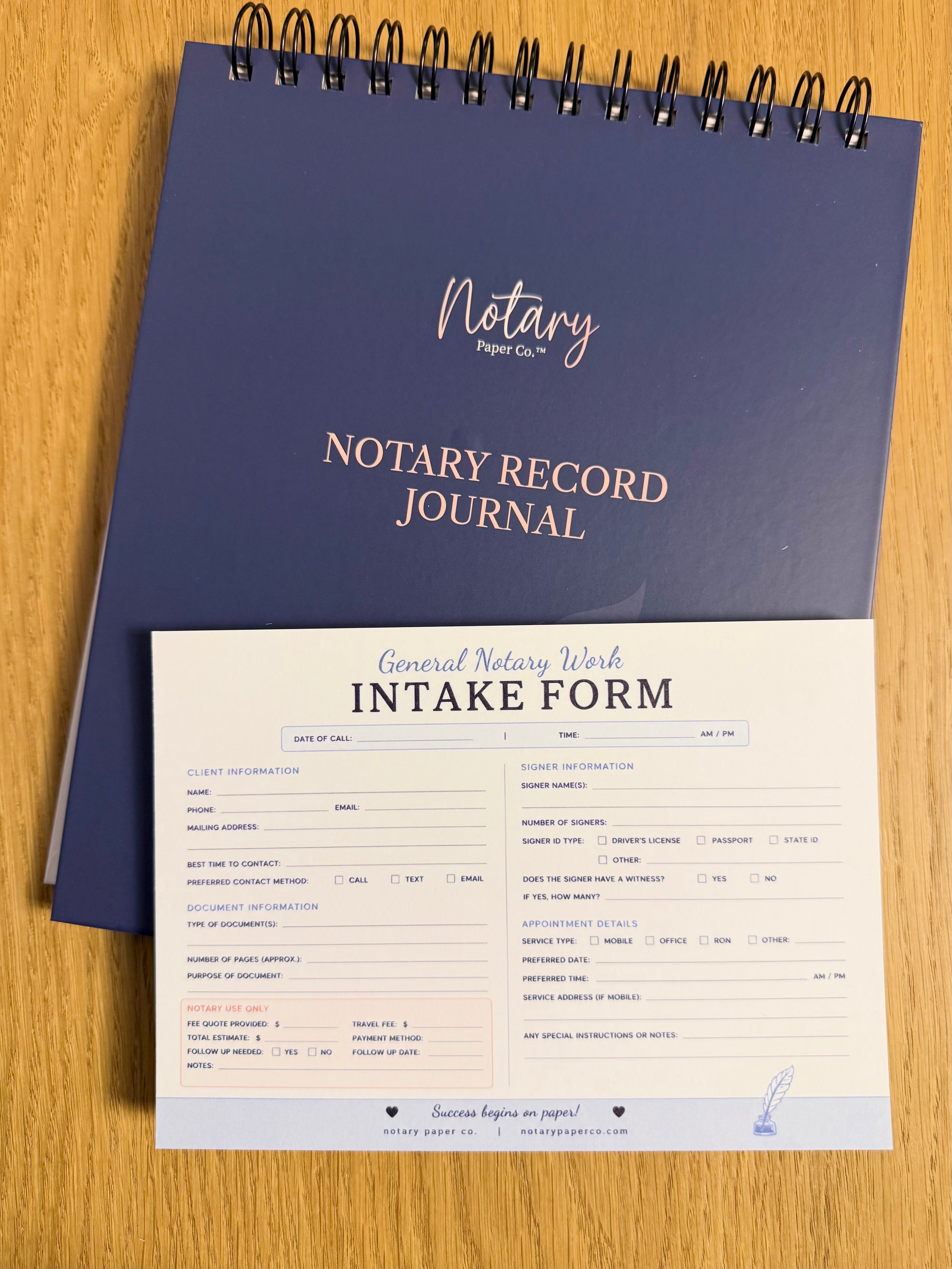
Flag anything odd on your intake sheet before you leave, not after. The Loan Signing Worksheet gives you one place to note signer count, document types, and printing questions from the first call — so the package and your notes agree.
Tab every signature, initial, and date field
The difference between a 45-minute signing and a 90-minute one is usually the flipping. Before the appointment, go through the package and flag every place a hand needs to land:
• Sign-here tabs on every signature line — no flipping back through the stack, no missed initials.
• Color-code by signer. Two signers on a refinance? One color for each, so "sign here" never means "wait, which one of us?" The Sign Here Tabs come in seven colors, which is exactly why.
• Sticky flags for the unusual. An acknowledgment certificate buried in the middle, a copy the signer keeps — Page Mates work as page flags and hold a quick reminder like "borrower keeps this copy."
Tabbing takes ten quiet minutes at home and saves twenty frantic ones in front of a client.
Fold ID checks into the flow, not the scramble
Every signer gets their ID checked — and the smoothest moment to do it is right at the start, before the first signature, while you're still making introductions. A quick pass with a UV light over each ID's security features takes seconds and settles the verification half of the job before documents are even open.
The Fraud Fighter UV Penlight is pocket-sized for exactly this moment. One caveat in the legal column: what counts as acceptable identification varies by state — your commissioning authority decides what's sufficient; the penlight just helps you check what you're shown.
Build a post-signing routine: scan-backs, drop, journal
The signing isn't over when the last signature dries. Make the close as systematic as the setup:
• Review before you leave. Flip the tabs one last time and confirm every field is filled and every initial is where it belongs. Catching a missed initial at the table takes thirty seconds; catching it after the drop takes a return trip.
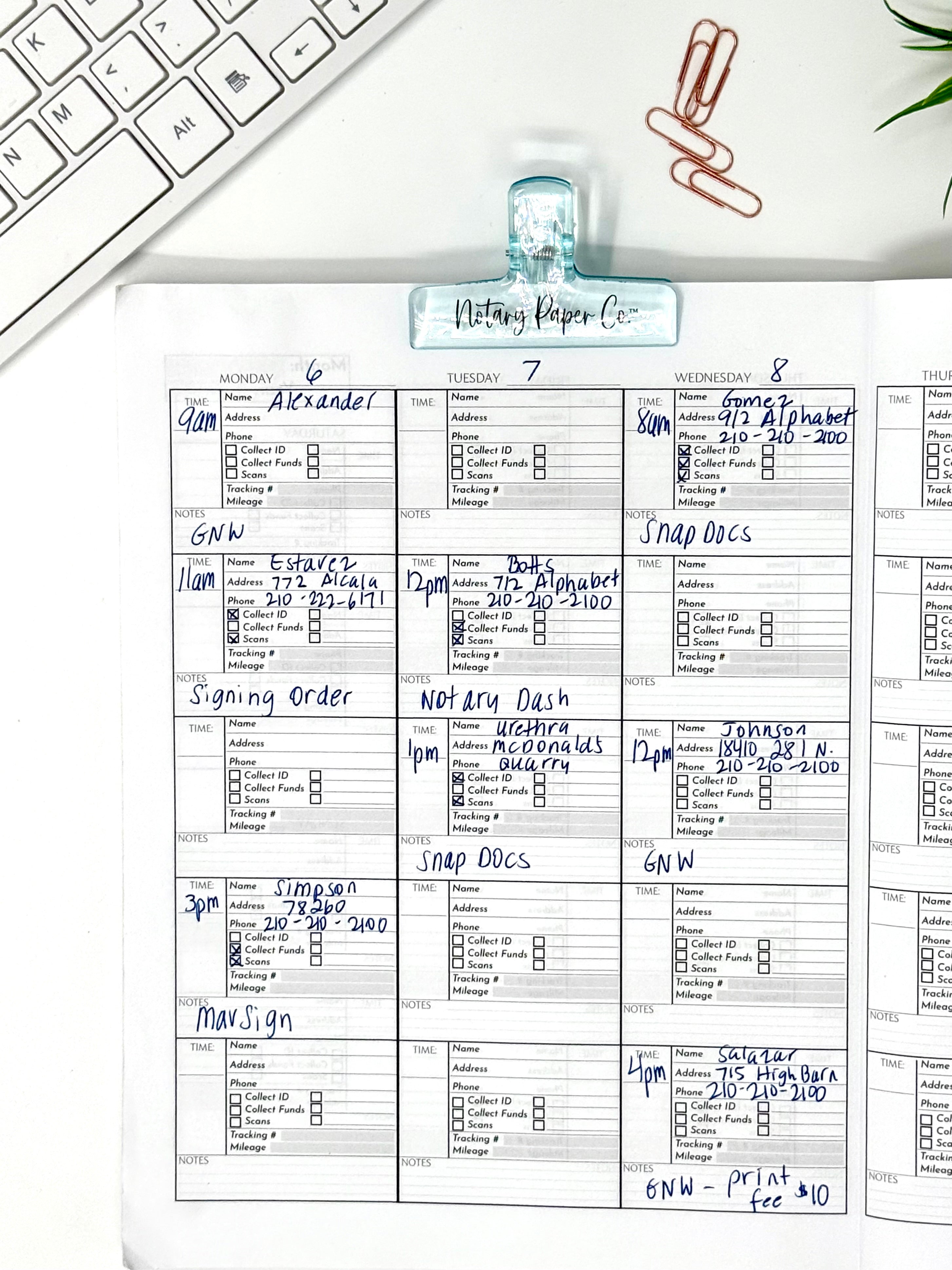
• Handle scan-backs immediately. If the lender requires scanned copies, do them the at the table and make last pickup!
• Journal while it's fresh. Record every notarization in your Notary Public Journal during the signing, never "from memory" later. Numbered entries make each act easy to find if a signer calls back months from now.
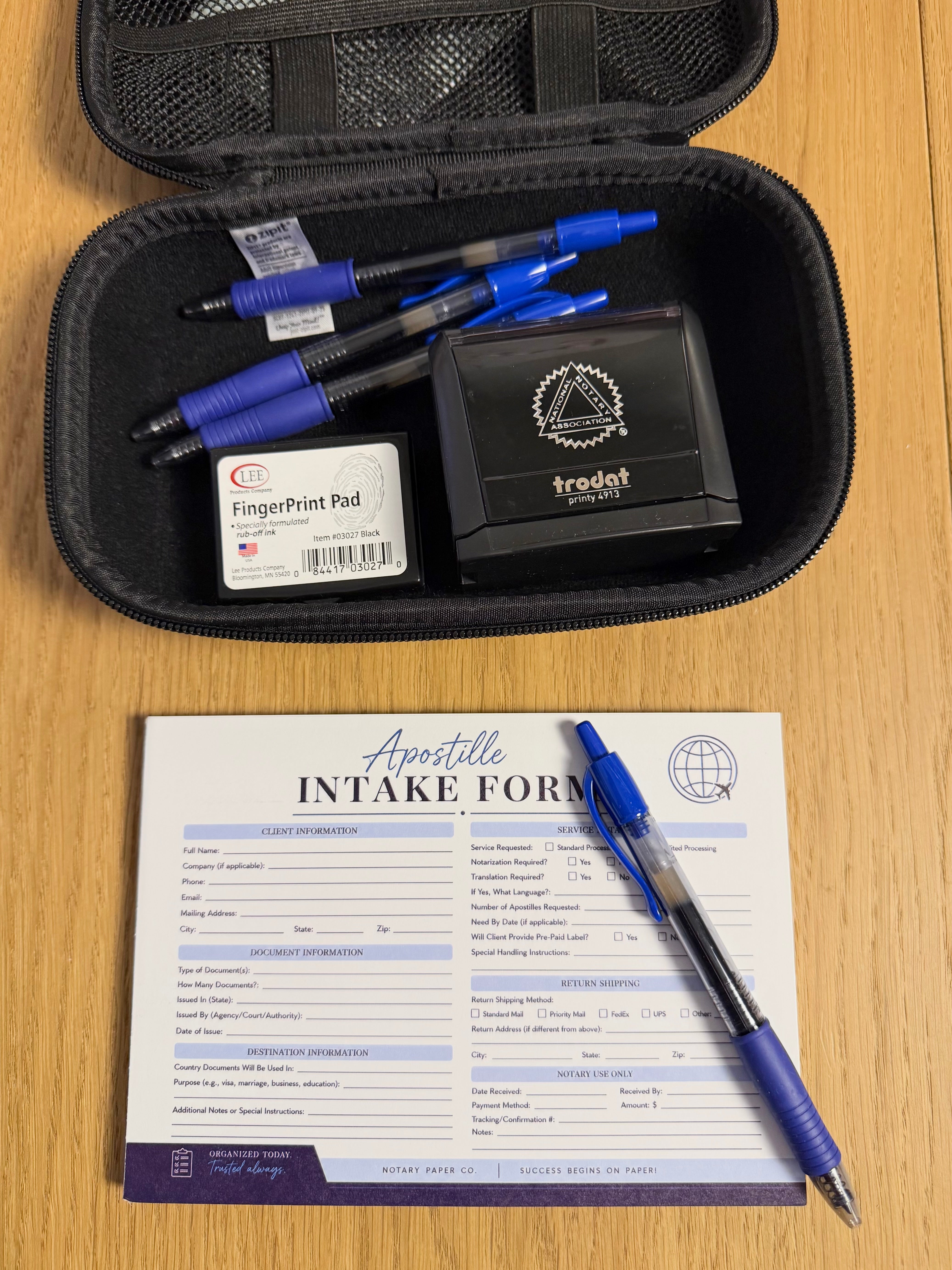
• Keep the kit packed. Everything — intake pad, tabs, penlight, journal — goes back in the case so the next signing starts ready. The Mobile Notary Essentials Case keeps each tool in its own compartment.
That chain — review in order, tab, verify, review, scan, journal, repack — turns every package into the same repeatable process. The package changes; the system doesn't.
Browse our notary accessories to stock your kit.