Cart
0
Your commission is official, your first appointment is on the calendar, and suddenly you’re wondering: What exactly should I put in my notary bag?
Take a breath. You don’t need every office supply ever invented, even if the cute stationery makes a convincing argument. You need a few dependable essentials, an organized system, and a little preparation.
This new notary supplies checklist will help you get your bag ready so you can arrive feeling prepared and professional.
1. Your Notary Stamp or Seal
Before heading out, make sure you have the stamp or seal required for your commission and that its information is correct.
Test it on a separate piece of paper to check that the impression is clear. Keep it protected during travel and secure when it isn’t in use.
Bag check: Stamp or seal, protective storage, and any supplies needed for your particular stamp.
2. A Notary Journal
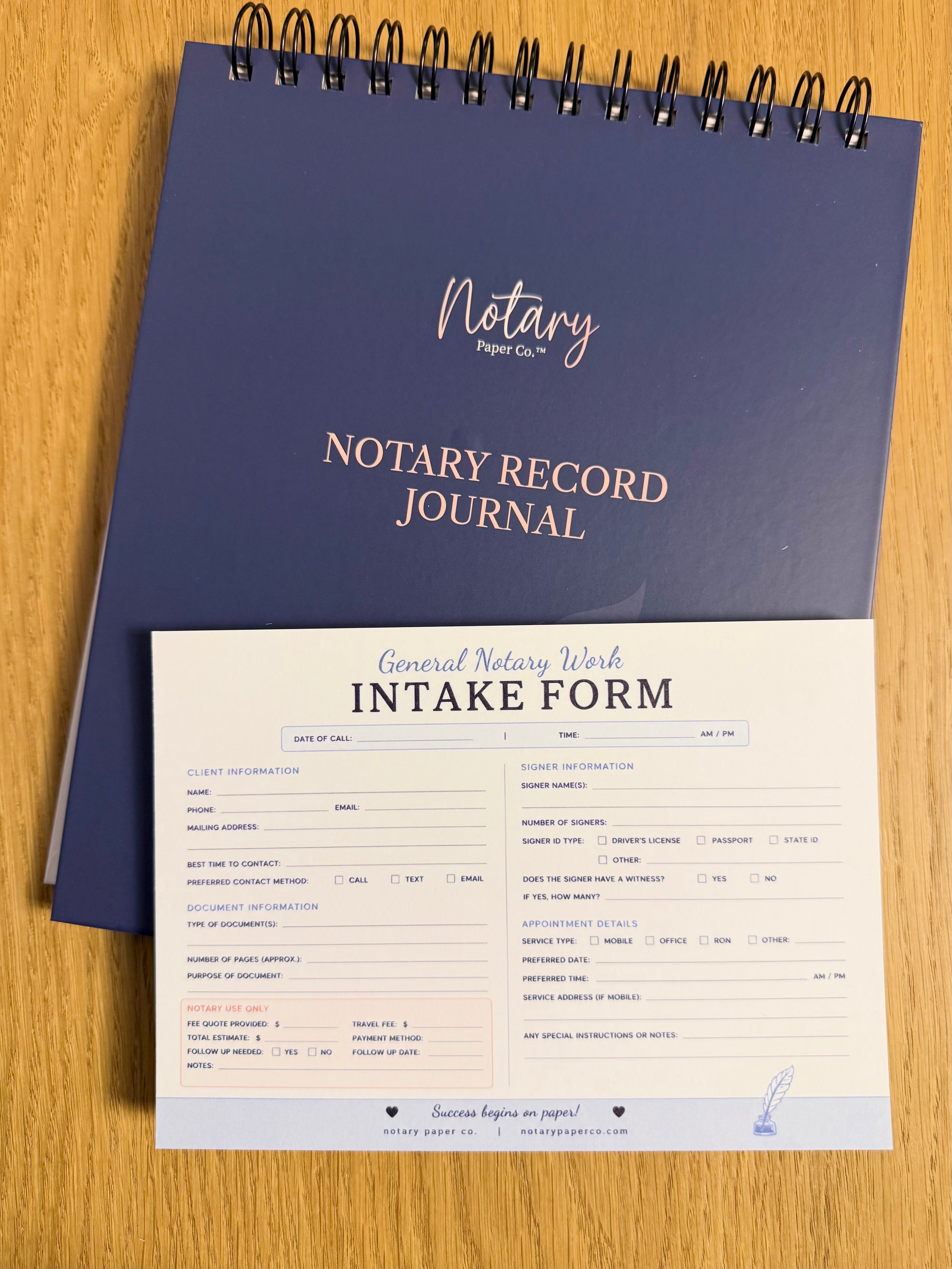
Build your recordkeeping routine from the beginning. Choose a journal with a layout you understand and a size that works for your appointments.
Before your first visit, familiarize yourself with the entry fields so you aren’t figuring everything out at the table. Follow your state’s requirements for whether a journal is required, what to record, and how to store it.
Notary Paper Co.’s notary journals are a useful place to begin your search for a dedicated record book.
Bag check: Journal and a clear understanding of your state’s recordkeeping rules.
3. Reliable Pens... and Backups!
A pen that stops working halfway through an appointment is an unnecessary plot twist.
Pack several dependable pens and check them before you leave. Confirm whether the documents or hiring company call for a particular ink color rather than assuming one color works for every appointment.
Bag check: Working pens in the appropriate ink color, plus extras.
4. A Way to Organize Client Inquiries
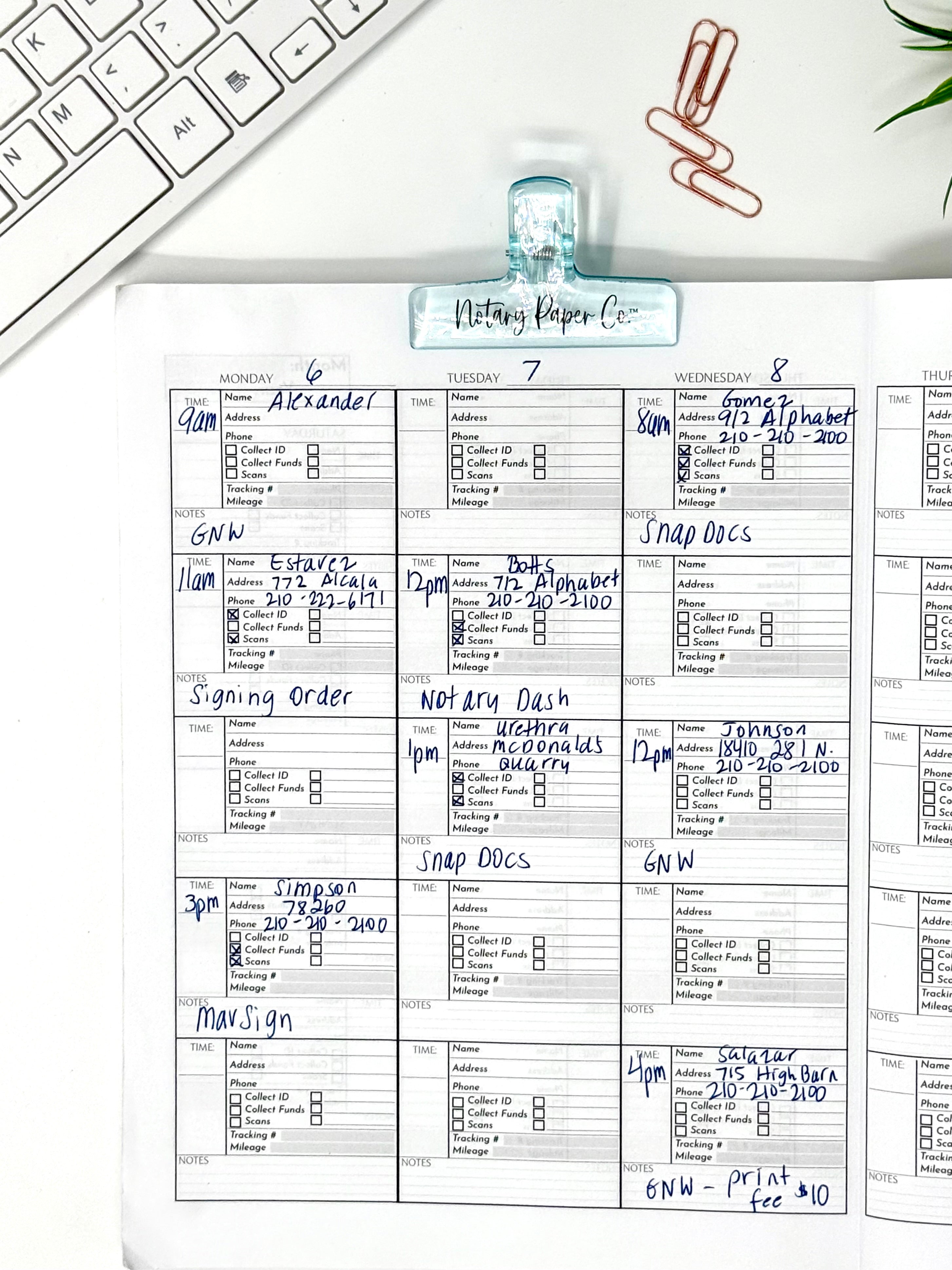
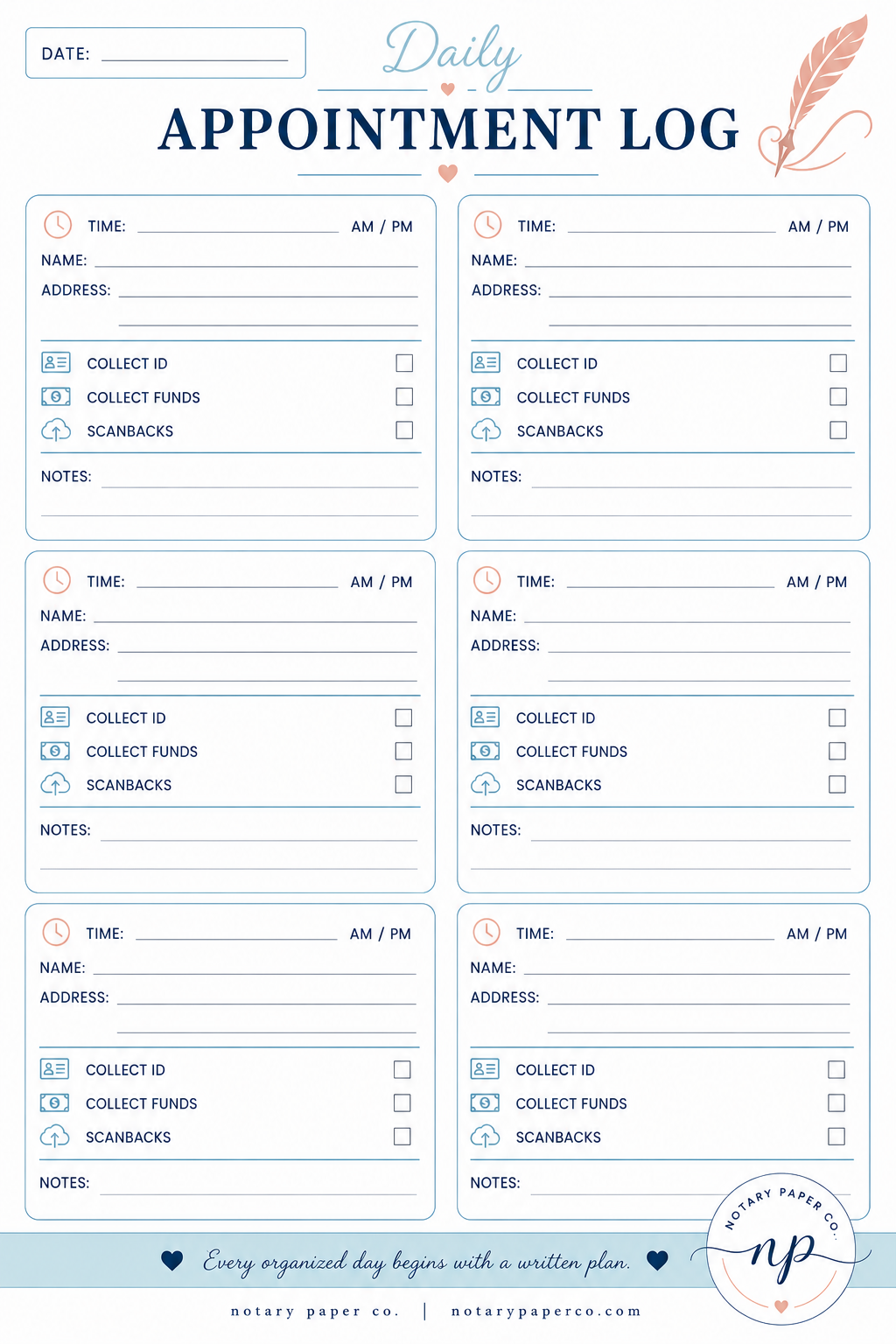
Preparation starts before you arrive. Having a consistent place to organize appointment details can help you keep track of client conversations.
Notary Paper Co.’s General Notary Work Intake Form can be part of that routine. Keep scheduling notes separate from your official journal, and protect any personal information you collect.
Desk check: An intake form or another organized system for appointment inquiries.
5. Sticky Notes and Signature Flags
Small supplies can make a big difference when you’re organizing paperwork.
Use sticky notes for temporary reminders and signature flags to mark locations when appropriate. Keep them clear of document text, and remove temporary notes or flags before returning paperwork unless instructed otherwise.
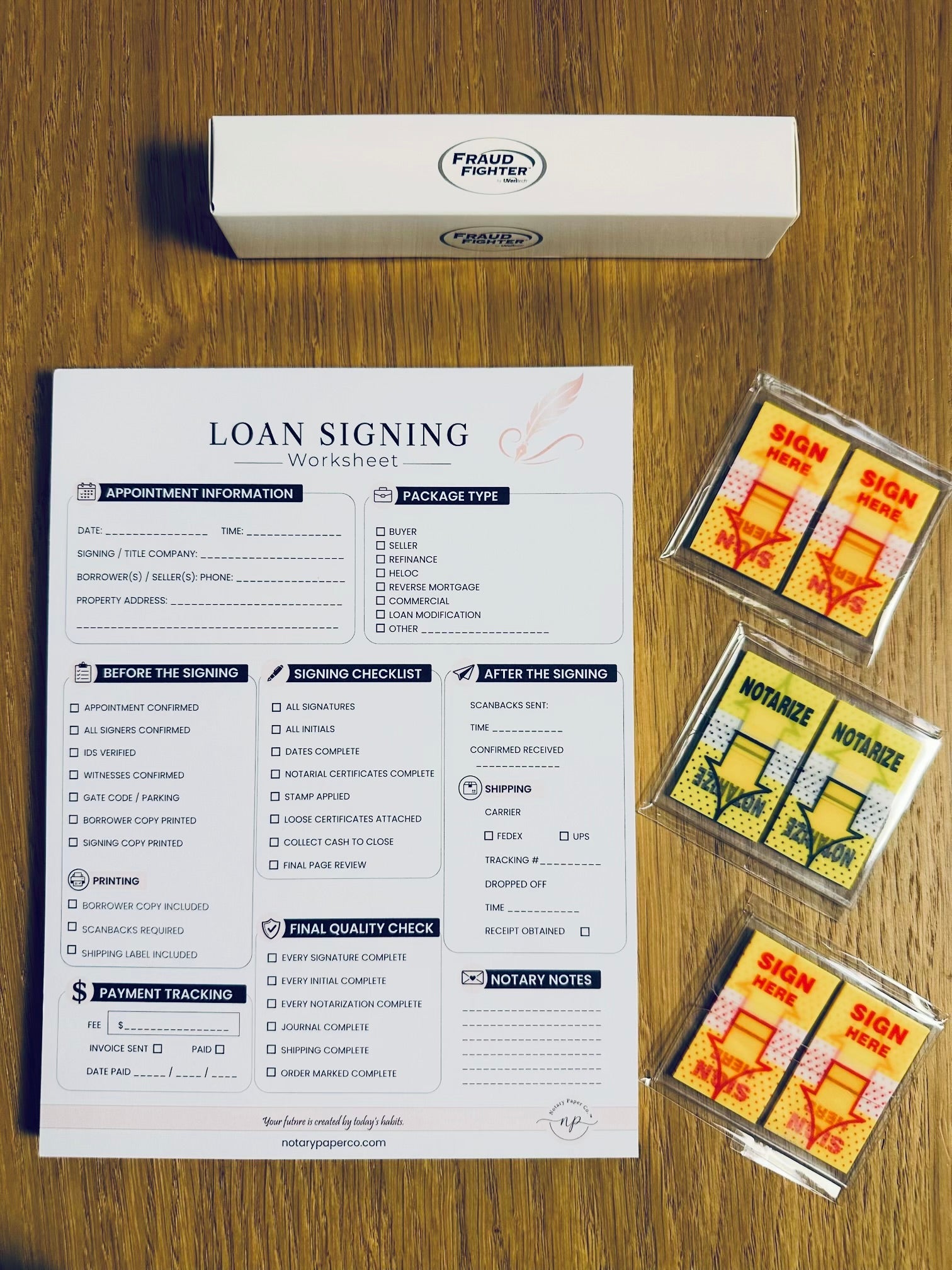
Notary Paper Co.’s Mini Notary Sticky Notepads and Sign Here Neon Sticky Flags make practical additions to your supplies.
One rule for your notes: keep sensitive signer information off anything that could easily be lost or seen by someone else.
Bag check: Sticky notes and removable signature flags.
6. A Case for Your Everyday Essentials
You shouldn’t have to empty your entire bag to find a pen.
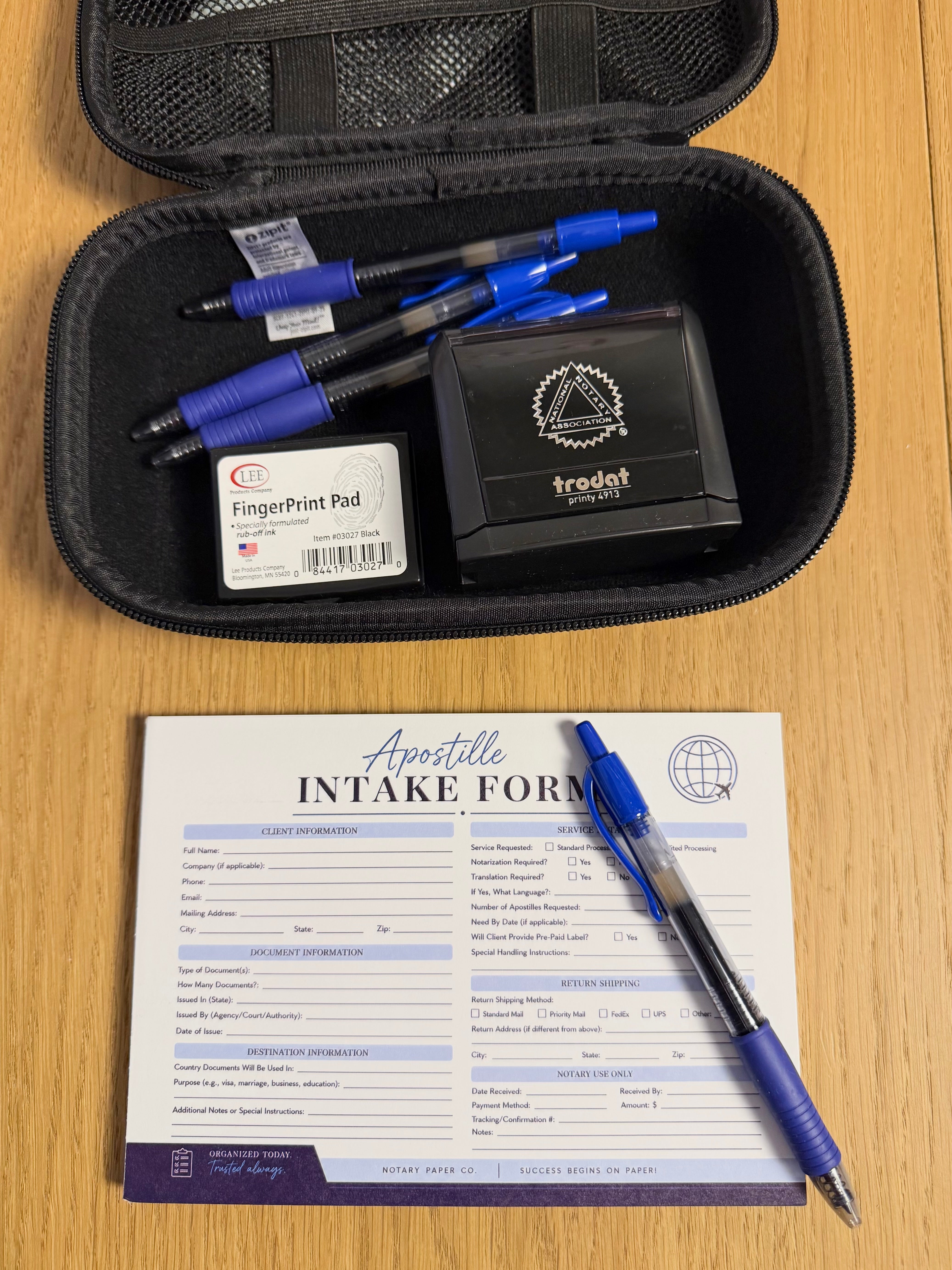
Group your smaller supplies together so they’re easy to locate. Notary Paper Co.’s Large Notary Essentials Case gives you a place to organize everyday items within your bag.
A supply case helps with organization; make separate arrangements for secure storage of your stamp, journal, and confidential paperwork.
Bag check: An organizer with a consistent place for each item.
7. Appointment Details and Directions
Before leaving, confirm the appointment time, location, contact person, and expected service. Discuss identification requirements in advance using your state’s guidance.
Check parking and building access, especially for offices, hospitals, or other locations with visitor procedures. Charge your phone and bring a charger if you’ll be out for several appointments.
Travel check: Confirmed details, directions, charged phone, and enough time to arrive.
8. Your State’s Notary Guidance
Cute supplies are a bonus. Knowing how to perform the requested notarization is essential.
Review your state’s official notary handbook or guidance before the appointment. Make sure the request is within your authority, and know where to find an answer if something unfamiliar comes up.
You don’t have to pretend to know everything. Taking time to verify a procedure is part of being prepared.
Your Quick First-Appointment Checklist
Before you walk out the door, check for:
-
Your notary stamp or seal, as applicable
-
Your journal, as required or appropriate
-
Working pens and backups
-
Organized appointment details
-
Sticky notes and signature flags
-
A supply organizer
-
A charged phone
-
Access to your state’s official notary guidance
-
A plan for keeping your tools and records secure
Start Prepared, Then Build Your Routine
Your first appointment doesn’t require a perfect bag. It requires preparation, attention to detail, and the right tools for the job.
After each appointment, notice what you used, what you wished you had, and what needs replenishing. Your setup will grow with your experience.
And if a few cute supplies make getting organized more enjoyable? We fully support that.
Explore journals, intake forms, sticky notes, and accessories at Notary Paper Co. to start building your everyday setup.
Notary Paper Co.—Where Notaries Shop.
This checklist offers general preparation ideas. Notary requirements vary by state; follow your commissioning authority’s current rules and guidance.